



Phase 3 – Section 1 – P3.1.3
ISOv8® by ContainerKing® - Real-World Product ExamplesLined & Insulated Storage Units
Lined and insulated storage buildings designed for reliable asset protection — helping businesses protect stock, tools, records and moisture-sensitive materials from damp, condensation and unstable internal conditions.
Descriptor
How ISOv8® supplies lined and insulated storage buildings across the UK — aligning environmental protection, internal usability, service provision, stock access and long-term commercial reliability.
Where This Page Sits in ISOv8®
Phase 3 — SEE focuses on understanding what well-considered shipping container conversions and steel anti-vandal buildings look like in practical commercial use across the UK.
P3.1.3 explores lined and insulated storage buildings supplied for business asset protection — helping businesses understand how insulation, lining, ventilation, internal usability, electrical provision, access frequency and stored material sensitivity influence the correct storage building solution.
Rather than treating storage as simple locked space, this page focuses on how insulated storage buildings perform in practical daily use once condensation risk, moisture-sensitive contents, access patterns, shelving, racking, lighting, heating and long-term commercial asset protection are considered.
1. What Lined & Insulated Storage Buildings Are and How They Are Used in the UK
Lined and insulated storage buildings for business are fundamentally different from basic steel storage units. They are not defined by internal volume alone, but by how reliably they help protect valuable contents over time.
ISOv8® supplies lined and insulated storage buildings using both insulated shipping container storage units and bespoke steel anti-vandal insulated storage buildings. These are used where the requirement goes beyond simple security and weather resistance, and where internal conditions, usability, stock protection and dependable long-term performance matter.
Businesses searching for insulated storage containers for sale in the UK, lined container storage units, insulated steel storage buildings, condensation-conscious storage units or steel anti-vandal insulated storage building suppliers are usually trying to answer the same practical question: will the building keep stock, tools, records, components, equipment, packaging and stored assets dry, stable, protected and usable over time?
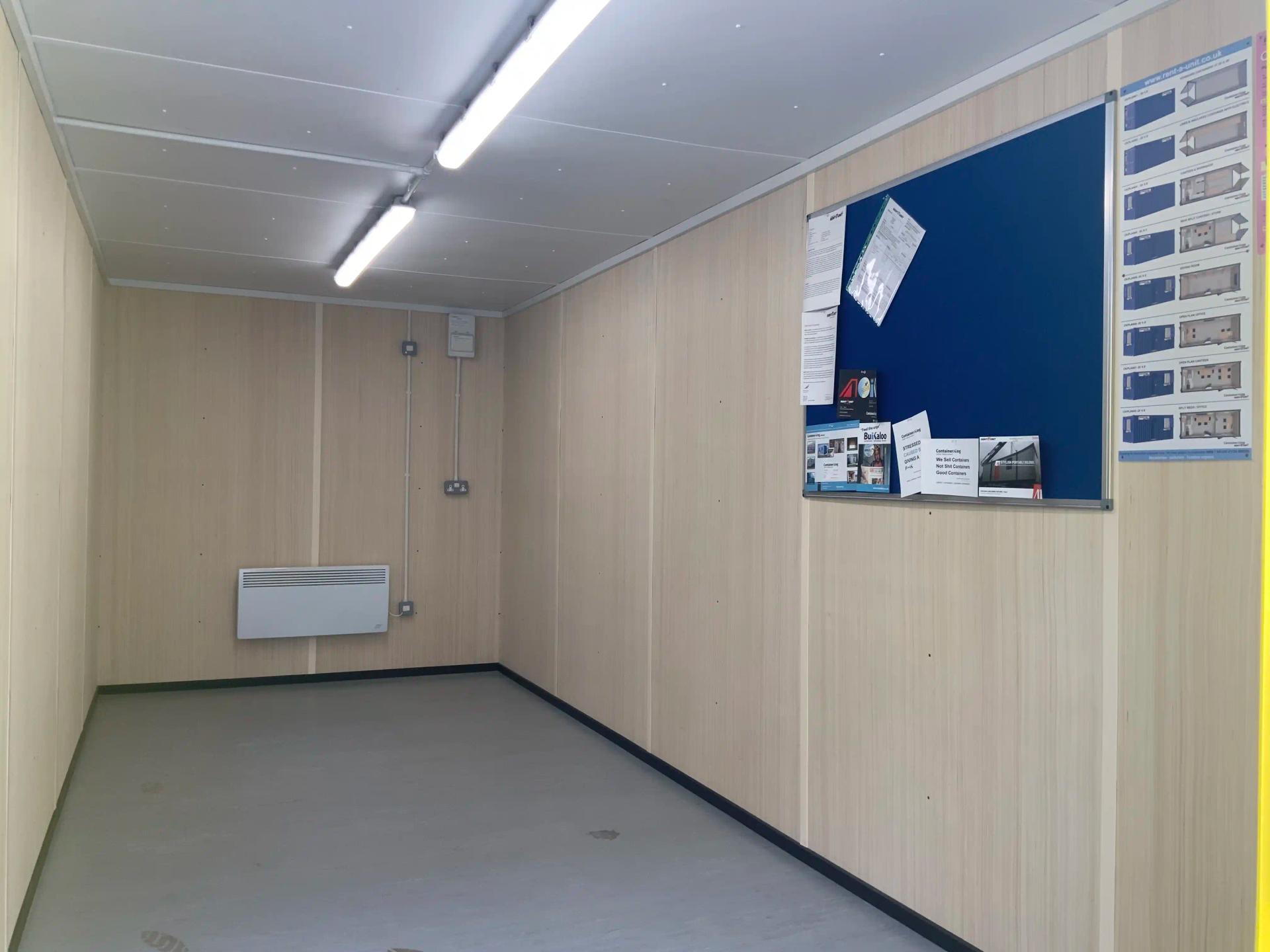
For many businesses, these buildings need to operate as practical working storage spaces rather than passive external stores. That is why lined and insulated storage buildings are often fitted with lighting, sockets, heating, electrical distribution equipment, bespoke shelving systems, racking and other service provisions that reflect how the building will actually be used.
These are not just insulated shells.
They are secure, usable and protective storage environments designed around real business asset protection.
2. Who Uses Insulated Container Storage Units & Steel Anti-Vandal Storage Buildings
Lined and insulated storage buildings supplied by ISOv8® are used by businesses that need more than locked space. They are typically chosen where stored contents are valuable, moisture-sensitive, operationally important, difficult to replace or unsuitable for basic unlined steel storage.
Typical users include businesses storing valuable stock, contractors storing tools, equipment and spares, manufacturers storing components and specialist materials, professional firms storing archived documents or sensitive records, and operations storing packaging, corrosion-sensitive goods, electrical equipment or serviced materials.
What links these users is the need for dependable internal conditions as well as security. The building must help protect contents from damp, condensation, temperature instability, poor airflow and repeated access cycles, while still supporting practical day-to-day use as part of a working business operation.
In many cases, the storage environment itself becomes part of the asset protection strategy. That is why the quality of internal lining, insulation, ventilation, electrical provision, heating options, racking layout and general detailing matters just as much as the external shell.
3. What Insulated Storage Buildings Must Support in Real Daily Use
In practical use, lined and insulated storage buildings protect contents from the slow and cumulative damage caused by unstable internal conditions.
These buildings are commonly used to store stock, tools, records, documents, packaging, electrical equipment, components, spare parts and other moisture-sensitive commercial materials. In many cases, the issue is not simply whether the building keeps rain out. The real issue is whether it maintains stable enough internal conditions to reduce gradual deterioration over time.
A properly specified insulated storage building must therefore do more than provide enclosed space. It must support reduced condensation risk, stable internal conditions, practical and safe access, usable internal lighting, appropriate electrical provision and, where required, heating or ventilation to improve internal stability.
That is why many lined and insulated storage units are fitted with lighting for visibility, sockets for chargers or temporary working equipment, heating to improve winter usability and electrical distribution where the building forms part of a working operational environment.
Security without environmental control is incomplete protection. Environmental control without internal usability also falls short in practice.
The strongest storage solution is the one where protection, access, internal fit-out and operational use are properly aligned.
4. Insulated Container Storage Units vs Steel Anti-Vandal Storage Buildings — Key Differences
Lined and insulated storage buildings for business use in the UK are typically supplied using either container-based structures or steel anti-vandal buildings, each suited to different storage patterns, internal layouts and access requirements.
Insulated container storage units provide compact, secure and relocatable storage environments. They are particularly effective where footprint matters, perimeter security is important, transportability remains useful, stock layout can remain disciplined and access patterns are controlled within a defined internal space.
Steel anti-vandal insulated storage buildings provide wider and more flexible internal space. They are often more suitable where racking is required, palletised goods are stored, organised stock zoning is important, access frequency is higher, airflow around stored goods requires more attention or the storage function needs to operate more like a working stockroom than a basic store.
The correct choice depends on what is being stored, how sensitive it is, how often the building will be opened, how the contents need to be accessed and how much internal space and organisation are required.
Where access becomes more frequent or stock organisation becomes more complex, steel anti-vandal insulated storage buildings often provide the more practical long-term solution.
5. How Lined & Insulated Storage Buildings Perform Over Time
Lined and insulated storage buildings only perform properly when the internal environment remains sufficiently stable in daily use.
In practical storage environments, moisture can be introduced through repeated access cycles, warmer external air entering cooler internal spaces, goods being brought into storage, poor airflow around stock, wet or damp materials, unsuitable base preparation, drainage issues or poorly resolved ventilation.
Over time, these factors reveal whether the building has been treated as a complete protective system or simply as an insulated shell.
Container-based insulated storage buildings perform well where access frequency is moderate, stock sensitivity is controlled, internal layout remains disciplined and relocatability remains beneficial.
Steel anti-vandal insulated storage buildings become more suitable where access increases, wider racking layouts are needed, palletised or zoned storage becomes important, or stored assets are more sensitive to environmental instability.
In both cases, the key issue is not simply whether the building is insulated.
It is whether the whole internal environment supports long-term asset protection.
6. Key Features of Insulated Storage Buildings for Business Asset Protection
The key features of a lined and insulated storage building only matter when they work together to protect the condition of what is stored inside.
Continuous insulation helps reduce cold internal surfaces and limit temperature swing. Internal lining separates stored goods from exposed steel and contributes to a cleaner, more usable internal storage environment. Vapour control helps limit moisture migration through the building fabric, while condensation management reduces risk to stock, packaging, equipment, documents, tools and stored materials.
Lighting provision improves visibility and supports safer access. Sockets and electrical systems allow chargers, maintenance equipment, dehumidifiers, heating, stock systems or temporary working activities to be accommodated where required.
Heating can improve winter usability and support greater internal stability, while ventilation must be aligned to access frequency, stored contents and the way the building is actually used.
Security remains essential, but layout flexibility is also important where shelving, racking, stock zoning and better organisation are required to keep goods accessible, protected and commercially usable.
7. What Determines Insulated Storage Building Performance and Internal Stability
The main issue in steel storage environments is condensation.
Moisture forms when warmer air enters a cooler internal space and settles first on the coldest available surfaces. In unlined or poorly detailed storage units, that moisture can form on internal steel surfaces, collect behind stored stock, affect packaging, corrode tools and components, damage labels and documents, and gradually degrade electrical items.
This is rarely sudden.
It is usually gradual, cumulative and predictable.
A lined and insulated storage building performs well when it is treated as a full internal protection system rather than as an insulated box. That system usually includes continuous insulation, internal lining, vapour control, suitable ventilation, sensible access patterns, good drainage and base preparation, internal service provision, and heating or electrical support where the use requires it.
Insulation alone does not solve the problem.
Performance depends on how the whole internal environment is resolved.
Container-based insulated storage buildings are often a strong solution where space and usage remain controlled. Steel anti-vandal insulated storage buildings become the better option where more space, improved airflow management, internal zoning, racking or more intensive access are required.
8. Common Mistakes When Buying Insulated Storage Buildings for Business in the UK
Insulated storage buildings are often misunderstood because buyers focus first on security or size rather than on the condition of what needs to be protected inside.
Common mistakes include assuming insulation alone prevents condensation, overlooking access frequency, underestimating the effect of stored goods on airflow, ignoring internal lining quality and detailing, failing to plan for lighting, power or heating, overloading the space without considering airflow, and treating a lined unit as though it needs no operational management.
These mistakes usually lead to gradual stock degradation, damaged packaging, corrosion, mould risk, reduced confidence in the storage environment, reduced insurability in some cases and avoidable replacement costs.
The real purpose of a lined and insulated storage building is straightforward: to help keep stored assets in the same condition as the day they were placed inside.
That is where the commercial value sits.
9. How ISOv8® Supplies Lined & Insulated Storage Buildings Across the UK
ISOv8® supplies lined and insulated storage buildings using a structured, practical approach based on what the building needs to protect and how it will actually be used.
The process begins with understanding what is being stored, how sensitive it is to damp, how sensitive it is to temperature instability, how often the building will be opened, what internal access is required, what shelving, racking or stock organisation is needed, what electrical or heating provision may be required, and whether the storage requirement is likely to grow over time.
The approach does not default automatically to container units and it does not default automatically to steel anti-vandal buildings.
The structural platform is aligned to the requirement so the result is dry, stable, secure, practical to use and properly serviced where needed.
This protects both the stored assets and the long-term usability of the building itself.
10. Frequently Asked Questions — Insulated Storage Buildings UK
What is the difference between a basic container and a lined and insulated storage building?
A basic container mainly provides security and weather resistance. A lined and insulated storage building is designed to provide improved environmental protection, better internal usability and more stable internal conditions for stored assets.
Do insulated steel storage buildings eliminate condensation?
They can significantly reduce condensation risk when correctly specified, detailed, ventilated and used properly. Performance depends on the full internal system rather than insulation alone.
When should I choose a steel anti-vandal insulated storage building?
A steel anti-vandal insulated storage building is usually more suitable where a container no longer provides enough usable space, internal layout flexibility, airflow control, racking practicality or access comfort for the way the storage needs to function.
What types of goods benefit most from insulated storage?
Documents, electrical components, packaging, specialist parts, stock, tools, records, equipment and other moisture-sensitive goods all benefit from a more stable and protected storage environment.
Do lined and insulated storage buildings need electrics?
Not always, but many business storage buildings benefit from lighting, sockets, heating, dehumidification options, chargers or electrical distribution where the building is accessed regularly or used as part of a working operation.
11. Visit ISOv8® Insulated Storage Buildings — Scunthorpe, North Lincolnshire
ISOv8® by ContainerKing® operates from Scunthorpe, North Lincolnshire, supplying lined and insulated container storage units and steel anti-vandal insulated storage buildings throughout England, Scotland and Wales.
Representative insulated storage buildings can be viewed at the Scunthorpe depot, allowing customers to assess internal lining, insulation systems, ventilation approach, lighting and electrical provision, shelving or racking options, general build quality and practical storage configuration.
This allows businesses to discuss requirements directly with the team and understand the difference between basic secure storage and properly specified lined and insulated storage buildings before making a decision.
Published: 12/09/2026
If you are considering commissioning a container office, workshop, storage unit or secure anti-vandal unit for site use and want clarity on structural suitability before specification is fixed, speak with ISOv8®. A short early discussion prevents disproportionate reinforcement and reactive redesign.
ISOv8® by ContainerKing® Limited Scunthorpe, North Lincolnshire
Tel: 01724 870000
Nationwide delivery across England, Scotland & Wales
Legal Disclaimer
The content provided in this document is for general information purposes only and is not intended to constitute legal, planning, building control, health and safety, or professional advice. Regulations and site-specific requirements vary widely across the UK. ISOv8® by ContainerKing® does not accept liability for actions taken, losses incurred, or decisions made based on the information provided. Always consult your local authority, planning department, building inspector, legal adviser, or relevant professional before starting any container project. Use of this document is entirely at your own risk. For more information, please see our Terms of Use.
Copyright Notice
© 2026 ISOv8® by ContainerKing®. All rights reserved. You are welcome to link to this page or share brief excerpts for commentary, review, or non-commercial purposes, provided proper credit is given to ISOv8® by ContainerKing®. No part of this document may be reproduced, distributed, or transmitted in full in any form or by any means without prior written permission from ISOv8® by ContainerKing®.